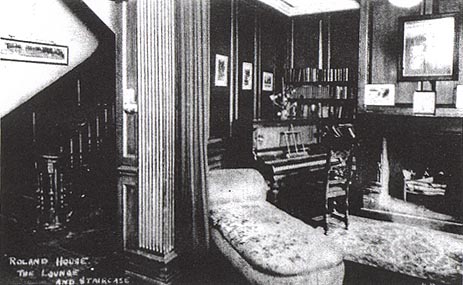
Another six months passed and, in April, 1920, Nevill offered to lease the House from the trustees and turn it into a scout settlement, taking the whole responsibility for finance. An appeal was launched in the "Headquerters Gazette" giving the aim of the new scheme as the making of Roland House a "centre of the spirit of scouting for the benefit of East London scouts and of the movement as a whole." The proposals included a settlement for about 15 scouters, a hostel for a few boys (particularly orphaned boys or those from outside London who were working or studying in the capital) and a meeting place for scouters in East London. There was also a suggestion that a campsite should be purchased but this never came to fruition as the movement had just been given Gilwell Park and the development of this and later sites removed the need. The way ahead was now cleared and Roland House began its new experience.
|